Tien Shan Seismotectonic Belt: Increased Seismic Activity in 2024
The Tien Shan belt is part of the broader collision zone of Central Asia. This mountain system represents a shared tectonic feature of southeastern Kazakhstan, Kyrgyzstan, and western China. The Tien Shan is strongly seismically active as a result of deformation of the Earth’s crust caused by the collision of the Indian and Eurasian lithospheric plates. Although the main collision boundary lies farther south, deformation stresses are transmitted hundreds of kilometers northward, causing active movements and frequent earthquakes even in the interior of Eurasia.
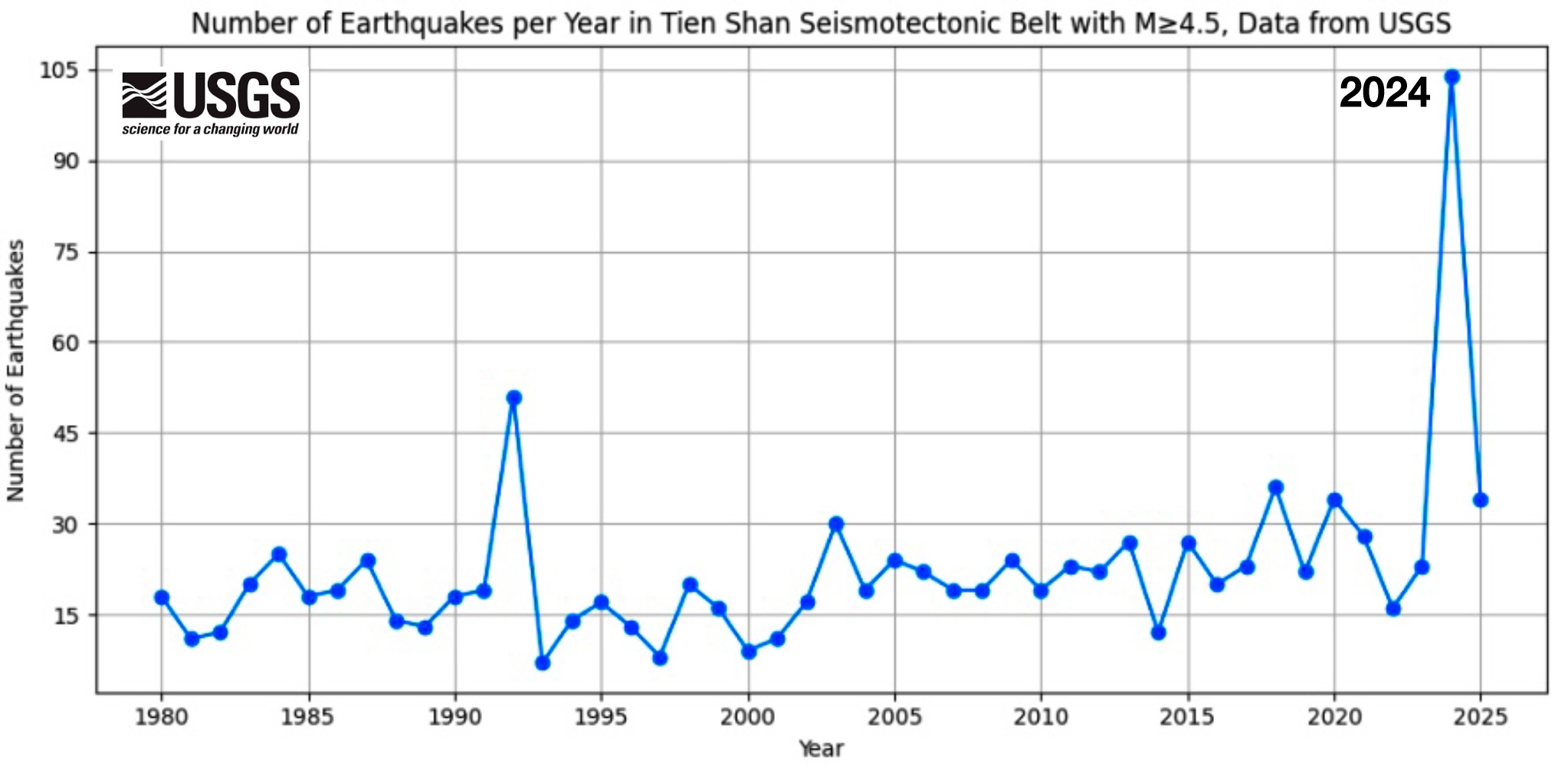
Fig. 1: Number of earthquakes with M ≥ 4.5 in the Tien Shan seismotectonic belt region since 1980, data source: USGS https://earthquake.usgs.gov/earthquakes/search/
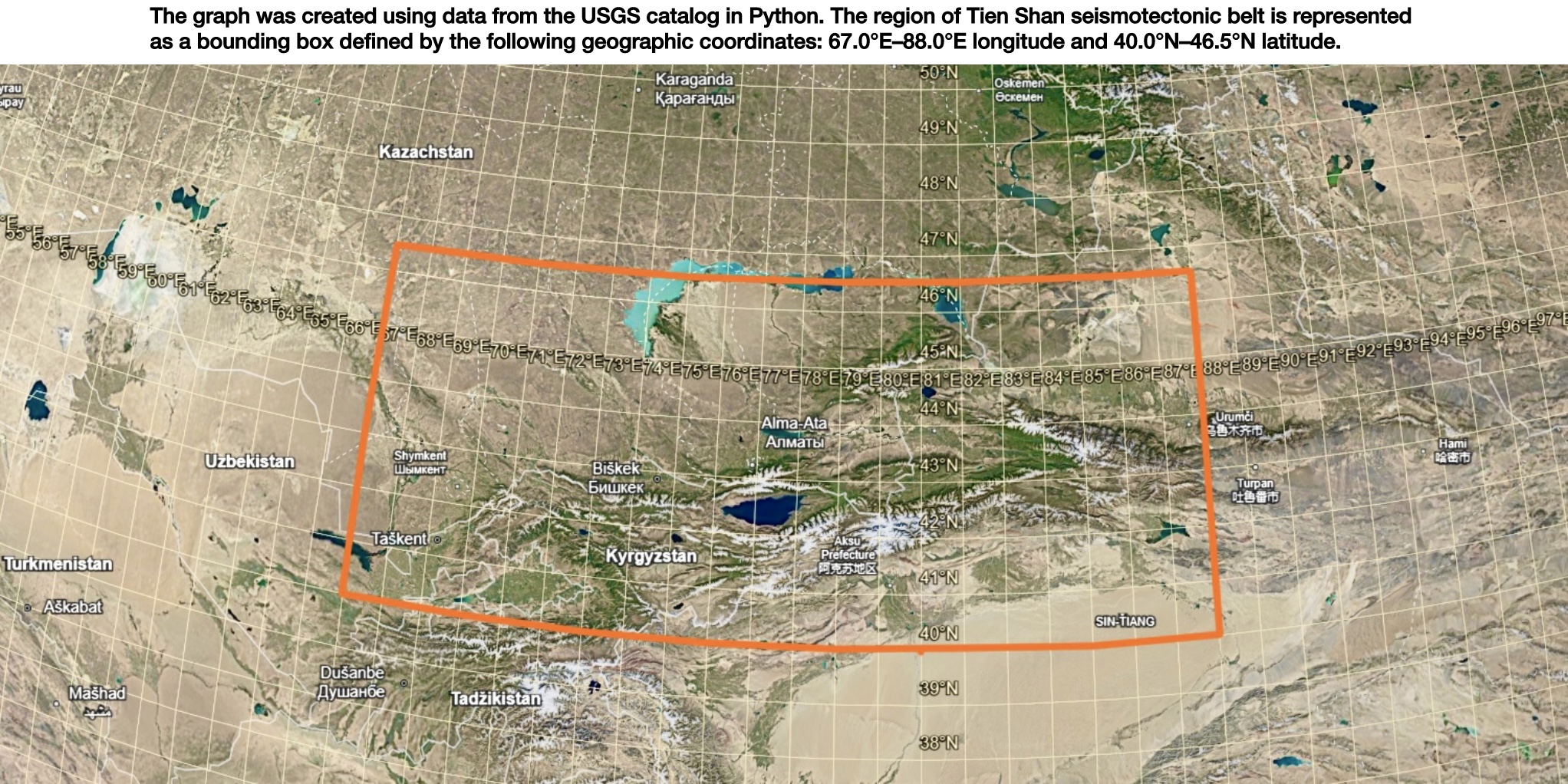
Fig. 2: Analyzed zone of the Tien Shan seismotectonic belt region, source: Google Earth, own modification
The graph in Fig. 1 of the analyzed area (Fig. 2) shows the development of the number of earthquakes with magnitude M ≥ 4.5 in the Tien Shan seismotectonic belt from the early 1980s to 2025 based on data from the USGS catalog. The analyzed area includes southeastern Kazakhstan, Kyrgyzstan, and western Xinjiang in China and represents an actively deformed intracontinental orogen (a mountain belt or region formed and shaped by tectonic processes) within the collision zone between the Indian and Eurasian plates.
The graph shows a long-term gradual increase in the number of recorded earthquakes, particularly since the turn of the millennium. In addition to this trend, pronounced short-term fluctuations are also visible, corresponding to the occurrence of strong main shocks and their subsequent aftershock sequences.
One of the most significant seismic years in the analyzed period is 1992, when on August 19 a strong earthquake occurred in the Suusamyr Basin area in the northern Tien Shan in Kyrgyzstan. This earthquake reached a magnitude of approximately M 7.3 (according to some sources up to M 7.5) and had a hypocenter at a depth of approximately 17–27 km. It is among the strongest earthquakes recorded in the Tien Shan region in modern times, and its effects were felt in Kyrgyzstan, Kazakhstan, Uzbekistan, and western China. In the graph, the year 1992 appears as a pronounced increase in the number of earthquakes, which is a typical consequence of extensive aftershock activity following a strong main shock.
Nevertheless, particularly remarkable is the year 2024, which in the analyzed time series shows the highest number of earthquakes with magnitude M ≥ 4.5 since the early 1980s. In that year, a very strong earthquake with a magnitude of approximately M 7.0 occurred within the same tectonic segment. Although its magnitude was lower than that of the Suusamyr earthquake in 1992, it was characterized by an extraordinarily rich aftershock sequence, with a high number of shocks in the magnitude range M 4.5 and higher. It is precisely this unusually intense aftershock activity that is the main reason for the extremely high number of recorded earthquakes in 2024, making this year the most seismically active in the entire observed period.