Southeastern Indian Ridge
The Southeast Indian Ridge, like the Mid-Atlantic Ridge, represents a divergent plate boundary where new oceanic crust is formed. This is also a dynamic environment where the Earth’s crust is thin, fractured, and directly linked to processes in the upper mantle; consequently, seismic activity here responds sensitively to changes in stress or magmatic impulses.
The graph in Fig. 1 shows the trend in the number of earthquakes with a magnitude of M ≥ 4.5 in the southeastern section of the Indian Ocean Ridge for the period from 1980 to 2025, based on data from the United States Geological Survey. A long-term upward trend is evident at first glance—while at the beginning of the observed period the number of earthquakes hovered around 15–25 events per year, in recent years it has reached values of around 90–120 events per year. This increase is not linear but occurs in several stages, with more pronounced increases observable particularly after the year 2000, peaking in 2024 and reaching a second peak in 2025. Short-term declines are also characteristic (e.g., in the late 1990s or around 2008), followed by a return to a higher level of activity, indicating the pulsating nature of oceanic crust deformation.
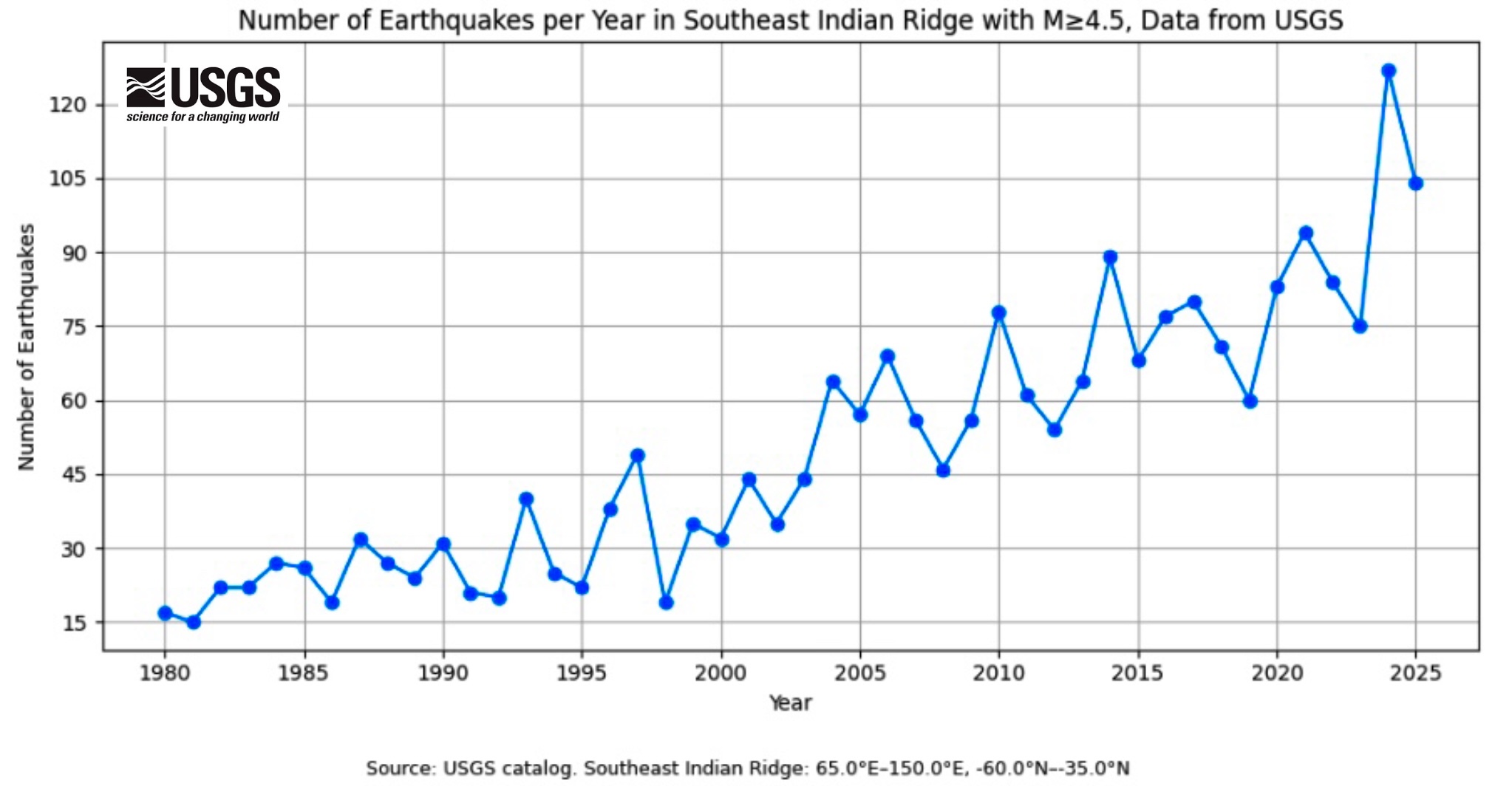
Fig. 1: Number of earthquakes with M ≥ 4.5 on the Southeast Indian Ridge, data source: USGS https://earthquake.usgs.gov/earthquakes/search/
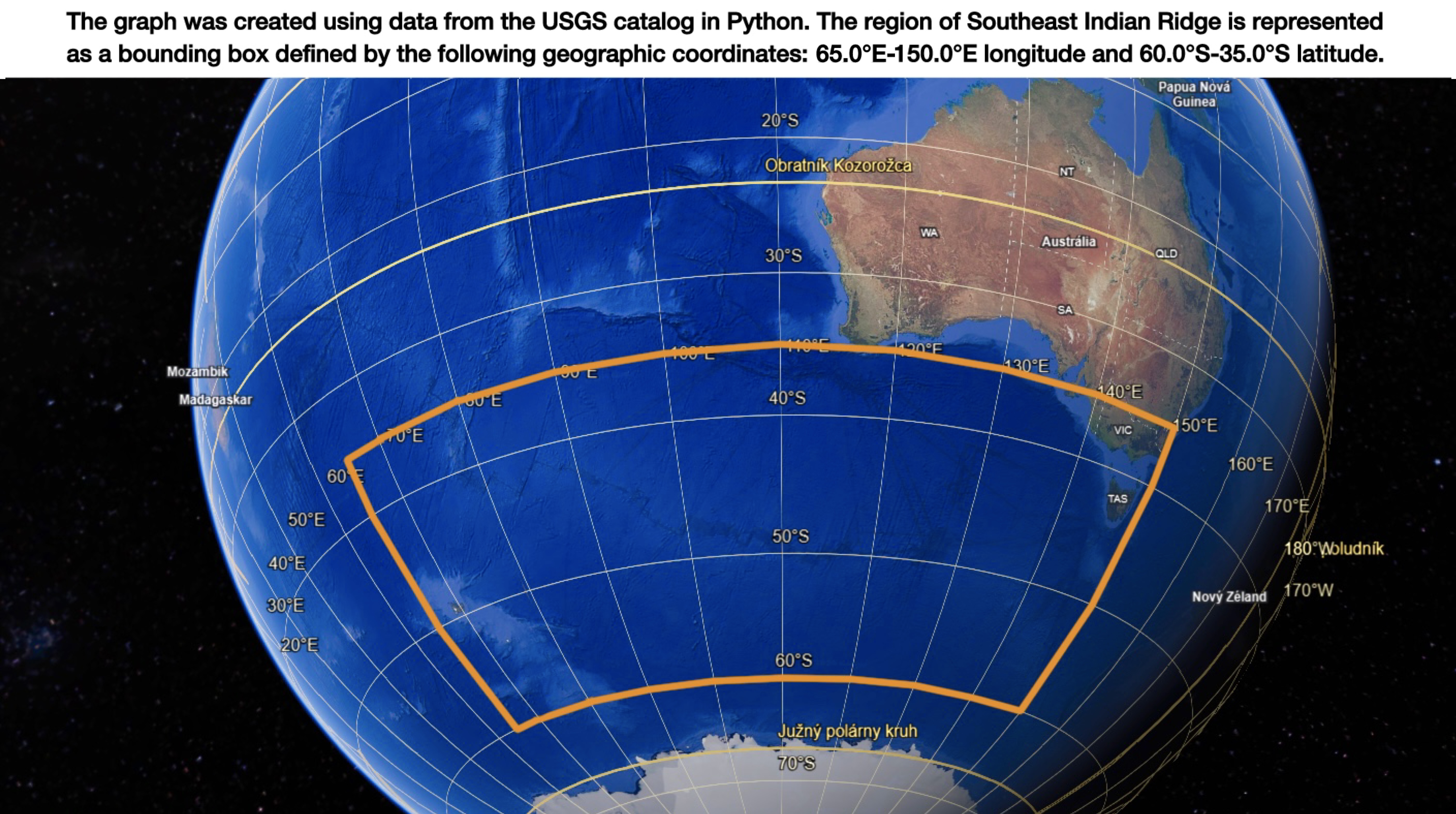
Fig. 2: Analyzed zone of the Southeast Indian Ridge region, sources: Google Earth, own modification
It is a significant part of the global system of ocean ridges that encircles the entire Earth. The ridge is nearly 6,000 km long and connects two major tectonic nodes—the Rodrigues triple junction in the Indian Ocean and the Macquarie triple junction in the Pacific Ocean. In addition, the Southeast Indian Ridge is influenced by the Kerguelen “hotspot,” located west of the ridge, which causes locally increased volcanic activity and influences the shape and evolution of the ocean floor (Fig. 4).1
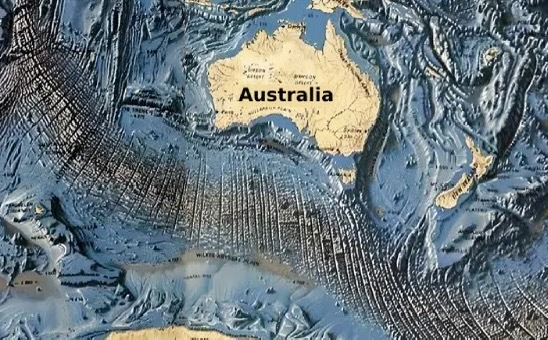
Fig. 3: Oceanic crust at the bottom of the analyzed zone of the Southeast Indian Ridge, source: https://www.geologyin.com/2025/02/oceanic-crust.html
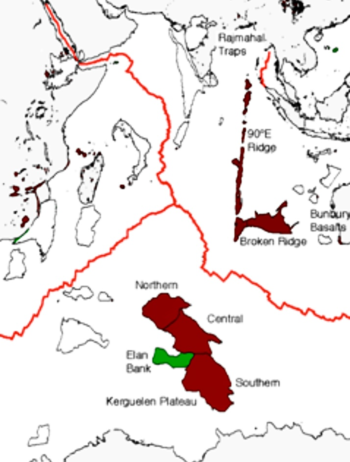
Fig. 4: The Kerguelen “hot spot,” source: https://www.iasgyan.in/daily-current-affairs/kerguelen-hotspot
Reference:
“Southeast Indian Ridge” (2025) Wikipedia. Available at: https://en.wikipedia.org/w/index.php?title=Southeast_Indian_Ridge&oldid=1315112042 (Accessed: March 16, 2026).