Philippines: Increased Seismic Activity in 2023
Mindanao – in December 2023, an earthquake of approximately M 7.6 struck the southern Philippines in a fault zone near Mindanao Island. This earthquake was the strongest in the Philippines in the last 33 years; however, what was unusual was that this earthquake produced many strong aftershocks.1
Four aftershocks with magnitudes M 6.3–6.9 occurred just a few hours after the main shock, and at least two of them showed a significant deviation from the expectation according to Bath’s law, since the magnitude difference between the main shock and the strongest aftershocks was substantially smaller than the typical value of ~1.2.2
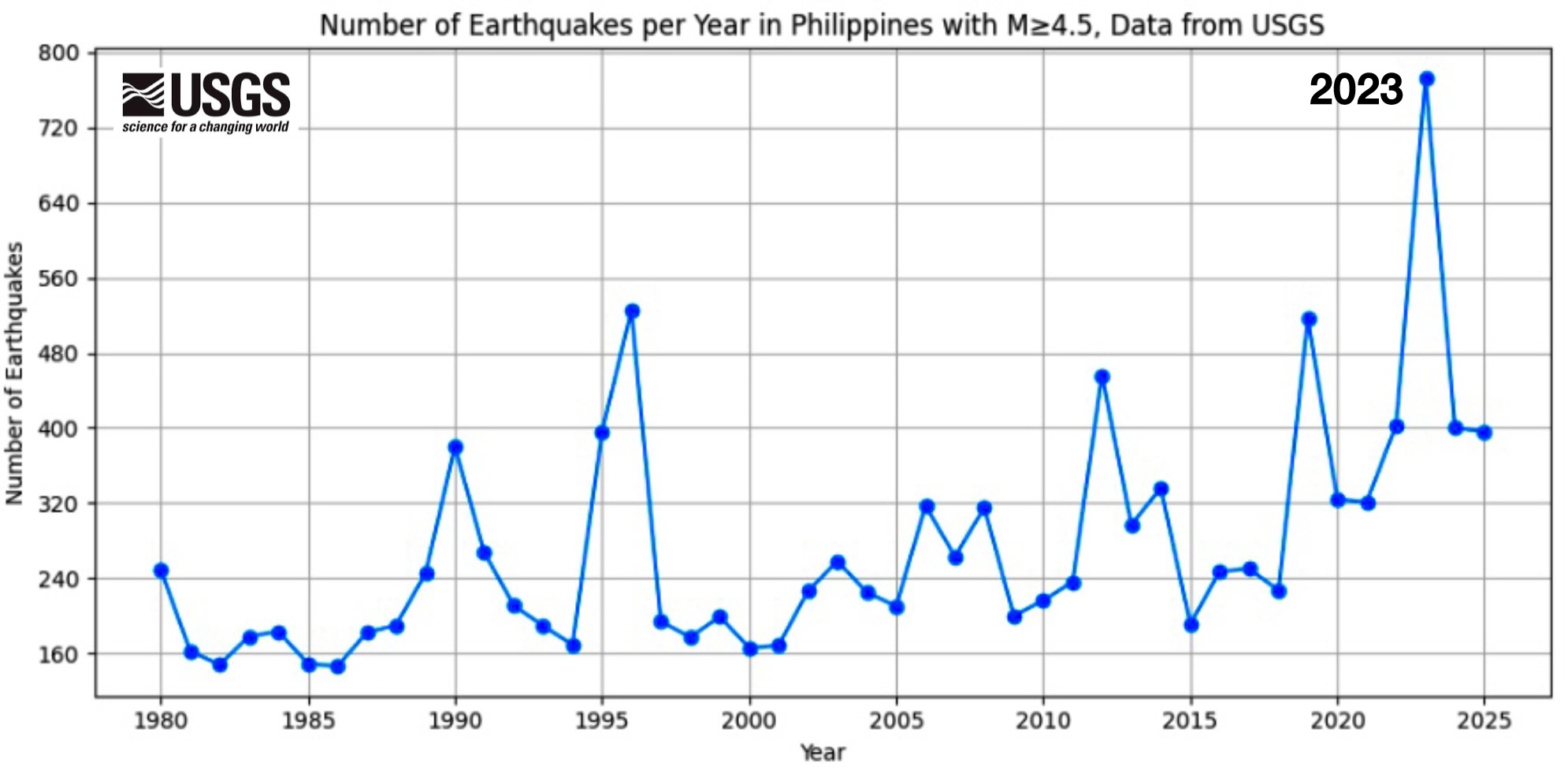
Fig. 1: Number of earthquakes with M ≥ 4.5 in the Philippines region since 1980, data source: USGS https://earthquake.usgs.gov/earthquakes/search/
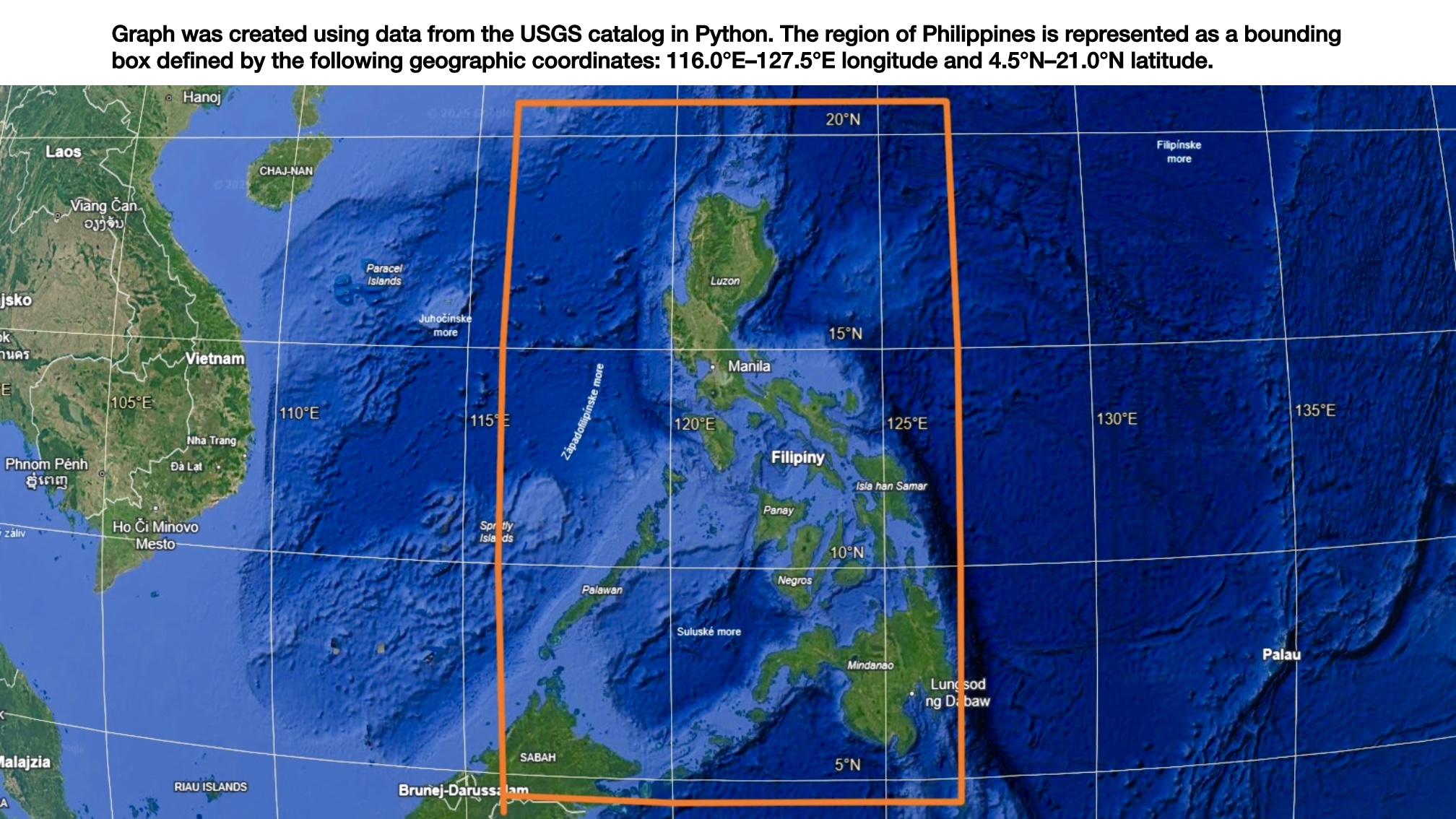
Fig. 2: Analyzed zone in the Philippines region, image source: Google Earth, own modification
Based on USGS data and the graph of the number of earthquakes with M ≥ 4.5 since the 1980s in Figure 1, it is interesting to compare the two largest seismic events in the Philippines over the past 45 years: the M 7.7 earthquake in 1990 (Luzon)3 and the M 7.6 earthquake in 2023 (Mindanao). In 1990, one of the strongest and most destructive earthquakes in the country’s history occurred; however, the total number of recorded earthquakes in that year according to the graph was only slightly elevated compared with surrounding years (on the order of several hundred M ≥ 4.5 events).
In contrast, the year 2023, in which the M 7.6 earthquake occurred, shows according to the USGS database a significantly higher total number of earthquakes—the graph shows the highest annual total since the 1980s, indicating intense and longer-lasting aftershock activity. In other words, although the 1990 earthquake was stronger than the one in 2023, it was accompanied by substantially fewer moderate-magnitude aftershocks, which were already technically detectable at that time. This contrast is unusual and may indicate differences in the fault rupture mechanism, in the distribution of stress within the Earth’s crust, or in the manner of seismic energy release between the two events.
A similar, although significantly weaker effect is also visible in the mid-1990s, when the graph records a pronounced jump in the years 1995–1996. This increase is related to a series of strong Philippine earthquakes around magnitude M 7. Compared with this, however, the year 2023 clearly stands out—not only in the absolute number of shocks but also in the extent and duration of the seismic response, suggesting extraordinarily efficient stress transfer within the complex tectonic system of the Philippines.
From the USGS database graph it is evident that since the early 1990s, and even more markedly since around 2000, we observe a gradual increase in the annual number of recorded earthquakes with magnitude M ≥ 4.5 in the Philippines. While in the 1980s annual values were mostly around 150–200 events, after 2000 values of 250–350 are common, and in the last decade pronounced maxima have appeared, particularly around the years 2012, 2019, and 2023. This trend points to increased seismic activity in the region. Figure 2 shows the boundaries of the analyzed zone on the map.
References:
Temblor (2023) “Major earthquake strikes the Philippines, followed by unusually large aftershocks,” Temblor.net, 7 December. Available at: https://temblor.net/temblor/major-earthquake-strikes-the-philippines-followed-by-unusually-large-aftershocks-15758/ (Accessed: March 16, 2026).
Significant Earthquakes - 2023. Available at: https://earthquake.usgs.gov/earthquakes/browse/significant.php?year=2023 (Accessed: March 16, 2026).
M 7.7 - 4 km E of Macapsing, Philippines. Available at: https://earthquake.usgs.gov/earthquakes/eventpage/usp0004bxs/executive (Accessed: March 16, 2026).