Myanmar: The Phenomenon of “Supershear” Earthquakes and an Unprecedented Increase in Seismicity
On March 28, 2025, Myanmar was struck by an M 7.7 earthquake with an exceptional characteristic—it was a record-breaking “supershear” earthquake1 2. This term refers to earthquakes in which the fault rupture propagates faster than the shear-wave velocity in the surrounding rock, reaching speeds of up to 5 km per second3.
Supershear earthquakes are very rare and represent the most destructive type of seismic events. When a fault propagates at supersonic speed relative to seismic waves, it generates a kind of “seismic shock wave” similar to a sonic boom produced by supersonic aircraft. This leads to much greater energy release and more destructive effects than in ordinary earthquakes.
The occurrence of such an earthquake in Myanmar, located within the complex tectonic interaction zone between the Indian and Eurasian plates, is a significant indicator of extremely high stresses in the Earth’s crust.
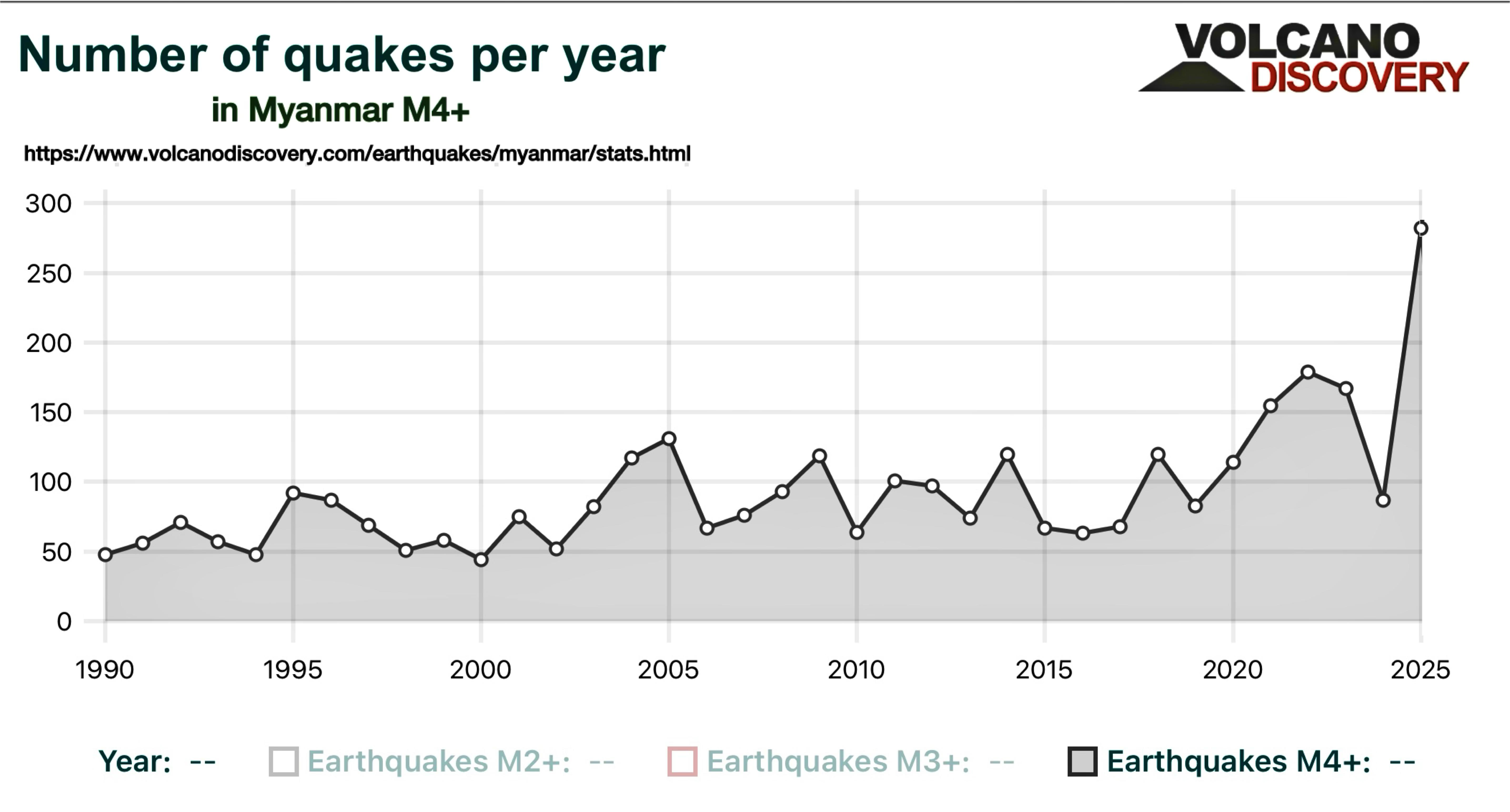
Fig. 1: Number of earthquakes M4+ in Myanmar. Source: https://www.volcanodiscovery.com/earthquakes/myanmar/stats.html
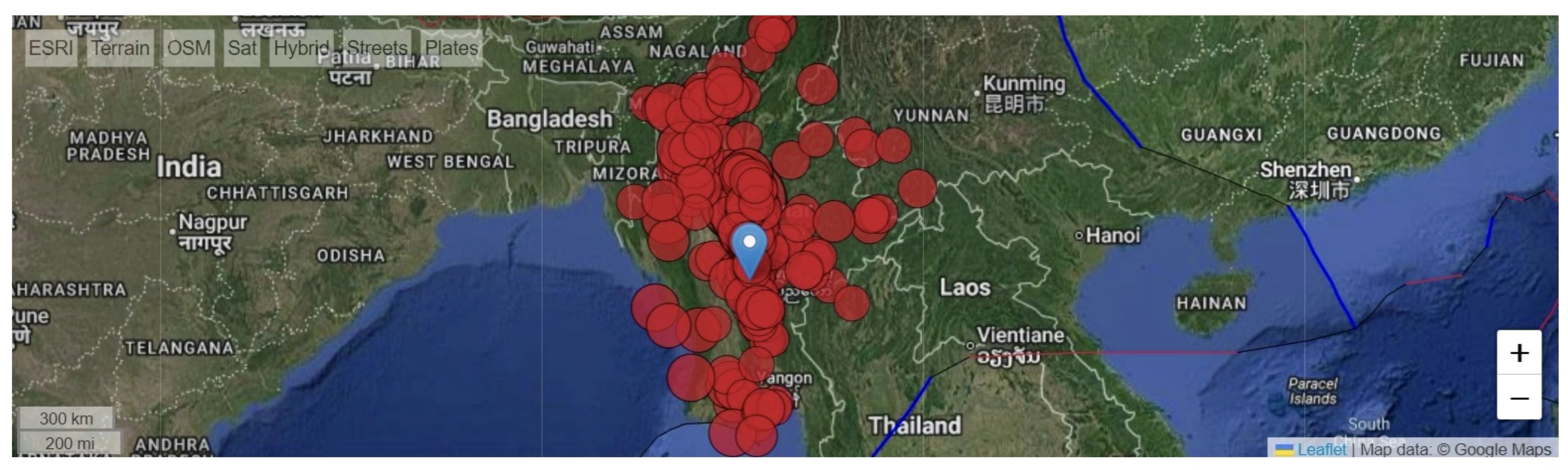
Fig. 2: Number of earthquakes M4+ in Myanmar in 2025. Source: https://www.volcanodiscovery.com/earthquakes/myanmar/stats.html
Myanmar is also experiencing unprecedented seismic activity in terms of the number of earthquakes this year. While Myanmar typically recorded fewer than 100–150 earthquakes per year with magnitude M ≥ 4, the year 2025 recorded a total of 282 earthquakes with magnitude ≥ 4 according to VolcanoDiscovery4 and 300 earthquakes with magnitude ≥ 4 according to the earthquakelist portal5.
The M 7.7 earthquake and its subsequent aftershocks triggered a significant increase in seismic activity, as shown in Figures 1-2.
The VolcanoDiscovery database was chosen for analyzing seismic activity in this region because it contained the largest number of recorded earthquakes compared with the USGS and ISC databases, with event counts in some years being approximately double.
References:
Egan, R. (2025) Reconstruction of record-breaking Myanmar earthquake confirms supershear event. Available at: https://phys.org/news/2025-08-reconstruction-myanmar-earthquake-supershear-event.html (Accessed: March 16, 2026).
Tsukuba, U. of (2025) Supershear “boomerang” rupture found in Myanmar earthquake defies typical seismic patterns. Available at: https://phys.org/news/2025-07-supershear-boomerang-rupture-myanmar-earthquake.html (Accessed: March 16, 2026).
Bouchon, M. et al. (2001) “How fast is rupture during an earthquake? New insights from the 1999 Turkey Earthquakes,” Geophysical Research Letters, 28(14), pp. 2723–2726. Available at: https://doi.org/10.1029/2001GL013112.
Earthquake statistics: Myanmar - detailed charts and tables, current and past seismic activity. Available at: https://www.volcanodiscovery.com/earthquakes/myanmar/stats.html (Accessed: March 16, 2026).
The complete Myanmar earthquake report (up-to-date 2026). Available at: https://earthquakelist.org/myanmar/ (Accessed: March 16, 2026).