Drake Passage: Awakening of the Antarctic Zone
Drake Passage between South America and Antarctica is known as one of the most dangerous seas in the world due to strong currents and waves. Geologically, however, this area is where two oceanic plates meet—the Antarctic and South American plates (specifically the Scotia Plate).
In 2025 the Drake Passage region was extraordinarily seismically active. As many as five earthquakes with magnitude 6 or greater occurred here, even though on average only one such earthquake occurs annually (Fig. 1). Moreover, the last earthquake with magnitude above M 7 had been recorded here more than 100 years ago, yet in 2025 three such events occurred (Fig. 3): M 7.4 on May 2, 2025, M 7.5 on August 22, 20251, M 7.6 on October 10, 20252.
When examining the USGS catalog for 1998 it was found that the Antarctic Pacific region had a magnitude completeness threshold of 5.3; therefore, for comparison of seismic activity in this region the threshold M ≥ 6 was chosen.3
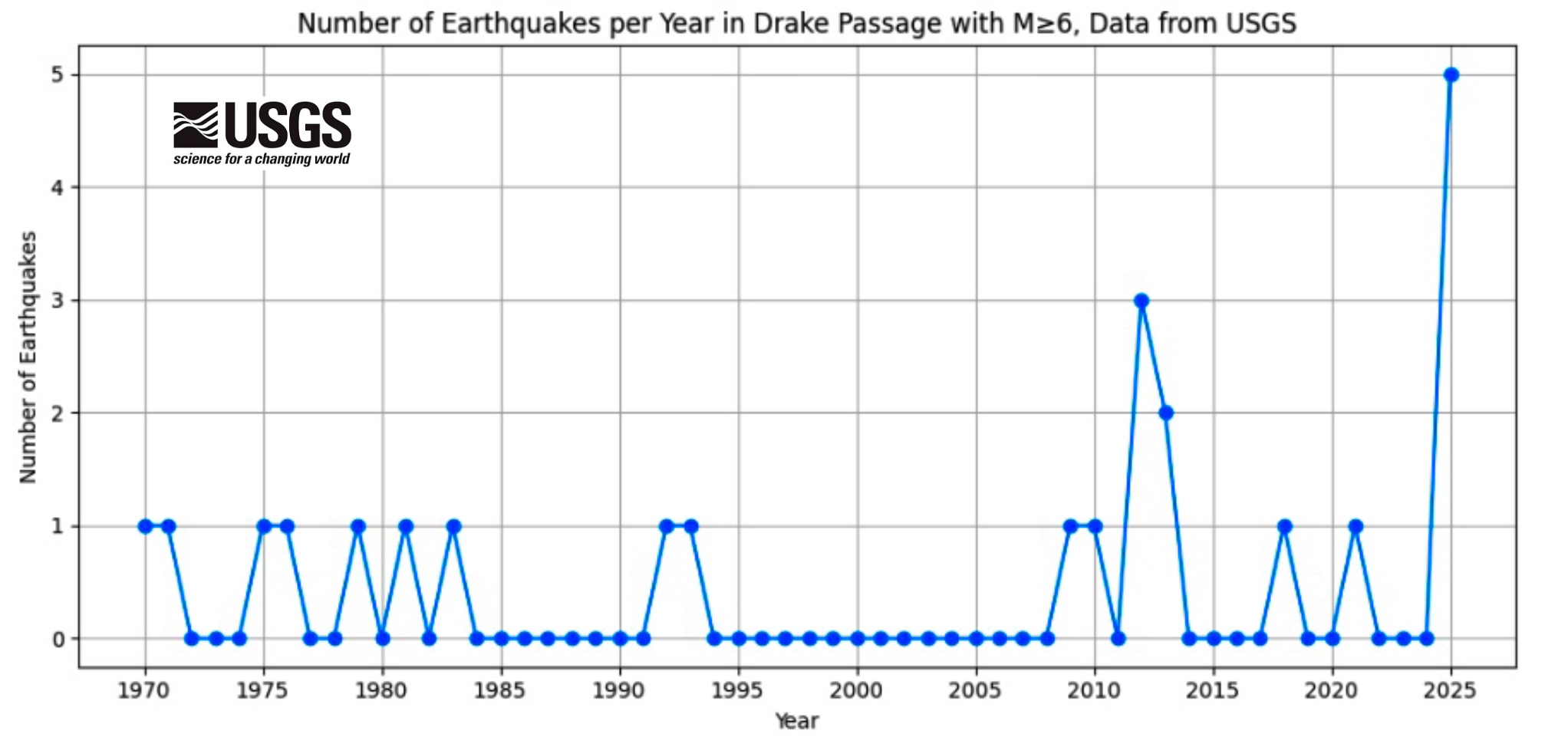
Fig. 1: Number of earthquakes with M ≥ 6 in the Drake Passage region since 1970, data source: USGS https://earthquake.usgs.gov/earthquakes/search/
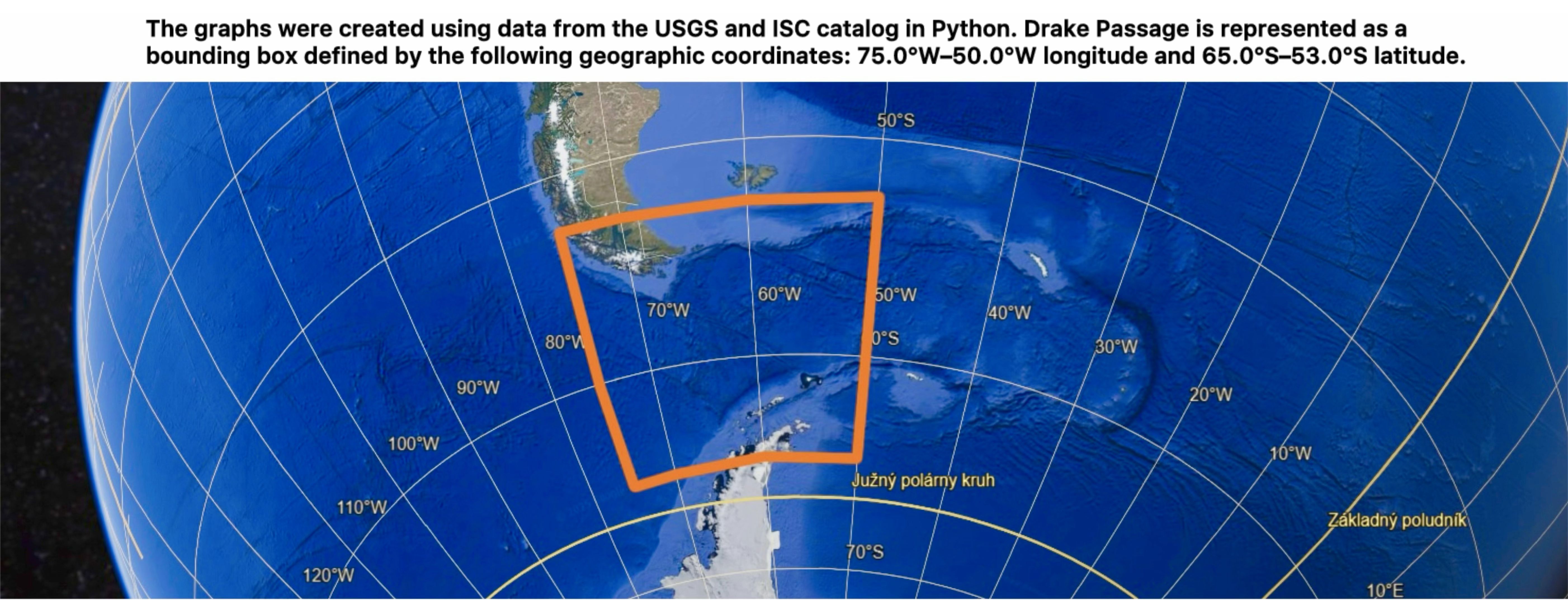
Fig. 2: Analyzed zone of the Drake Passage region, source: Google Earth, own modification
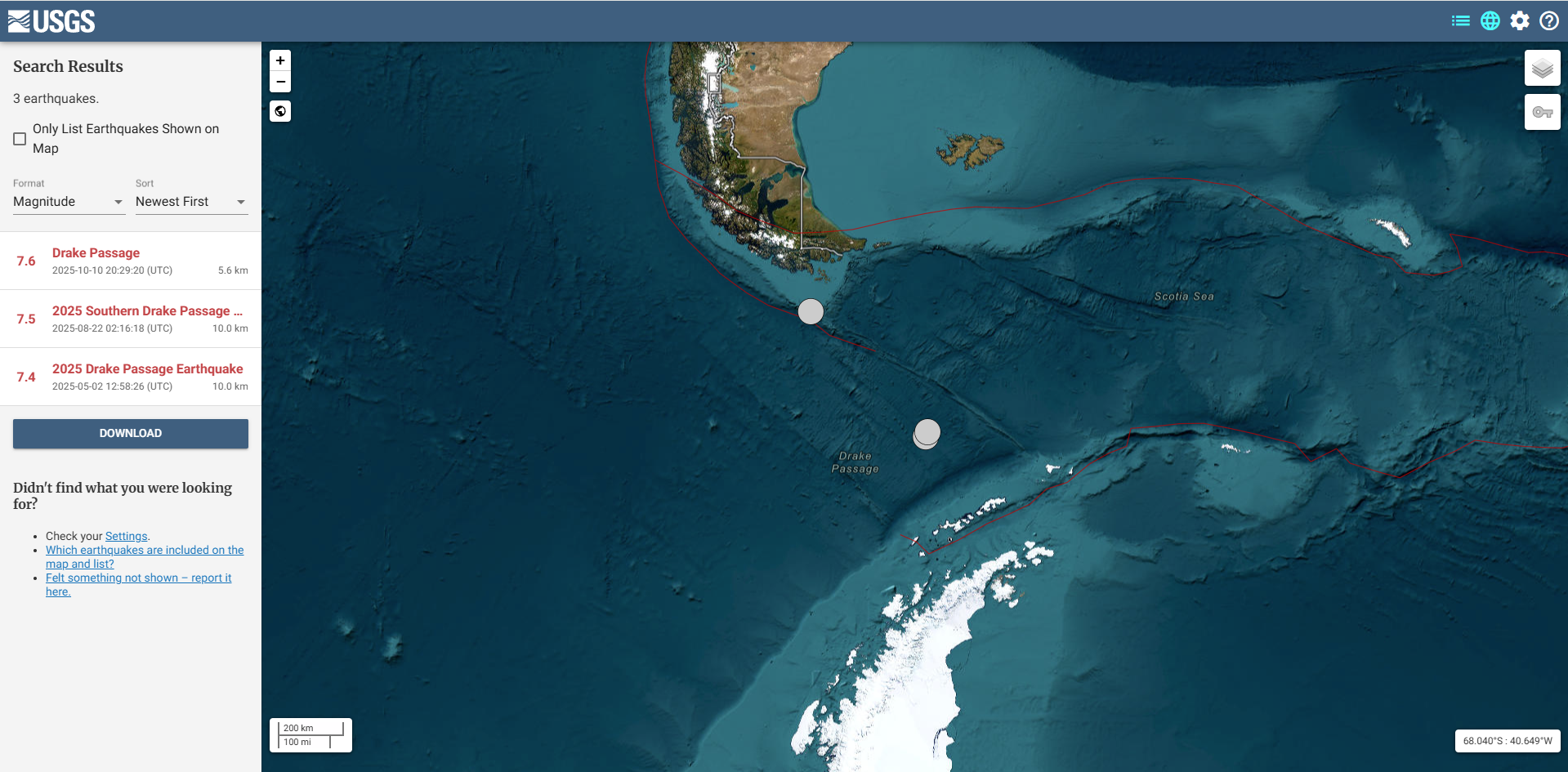
Fig. 3: Earthquakes with magnitude above M 7 in 2025 in the Drake Passage region, source: https://earthquake.usgs.gov/earthquakes/map/?extent=-68.12248,-97.64648&extent=-47.98992,-27.33398&range=search&baseLayer=satellite&timeZone=utc&search=%7B%22name%22:%22Search%20Results%22,%22params%22:%7B%22starttime%22:%222025-01-01%2000:00:00%22,%22endtime%22:%222026-01-01%2023:59:59%22,%22maxlatitude%22:-53,%22minlatitude%22:-65,%22maxlongitude%22:-50,%22minlongitude%22:-75,%22minmagnitude%22:7,%22orderby%22:%22time%22%7D%7D
Seismic activity in this area significantly exceeds the long-term average and the region is in a phase of extraordinary seismic revival.
Antarctica: 140 Volcanoes Beneath the Ice
Drake Passage lies near West Antarctica—an area where 140 volcanoes are hidden beneath the ice, making it one of the largest volcanic systems on Earth. Because it is the narrowest passage around Antarctica, its shape and location strongly influence the circulation of water around the continent, global ocean circulation, and climate.
Historic Seismic Swarm in the Bransfield Strait (2020–2021)
In the nearby Bransfield Strait, one of the largest seismic swarms in history occurred between 2020 and 20214:
More than 85,000 earthquakes in six months
Epicenter near the submarine volcano Orca Seamount, previously considered inactive
Movement of the Earth’s crust on King George Island by up to 11 cm
According to scientists, this was the result of increased magmatic activity and the migration of magma into higher layers of the crust—likely up to partial magma release.
References:
Major magnitude 7.5 earthquake - 2025 Southern Drake Passage Earthquake on Thursday, Aug 21, 2025, at 10:16 pm (GMT -4). Available at: https://www.volcanodiscovery.com/earthquakes/22087250/2025-08-22/02h16/magnitude7-Drake-Passage.html (Accessed: March 16, 2026).
Major magnitude 7.6 earthquake - Drake Passage on Friday, Oct 10, 2025, at 04:29 pm (GMT -4). Available at: https://www.volcanodiscovery.com/earthquakes/22261987/2025-10-10/20h29/magnitude7-Antarctica-Drake-Passage.html (Accessed: March 16, 2026).
IRIS Newsletter: Volume 2000, No. 1 (2000). Available at: https://ds.iris.edu/news/IRISnewsletter/volume2000no1/page-02-04.htm (Accessed: March 16, 2026).
Cesca, S. et al. (2022) “Massive earthquake swarm driven by magmatic intrusion at the Bransfield Strait, Antarctica,” Communications Earth & Environment, 3(1), p. 89. Available at:https://doi.org/10.1038/s43247-022-00418-5.